Dwight D. Eisenhower
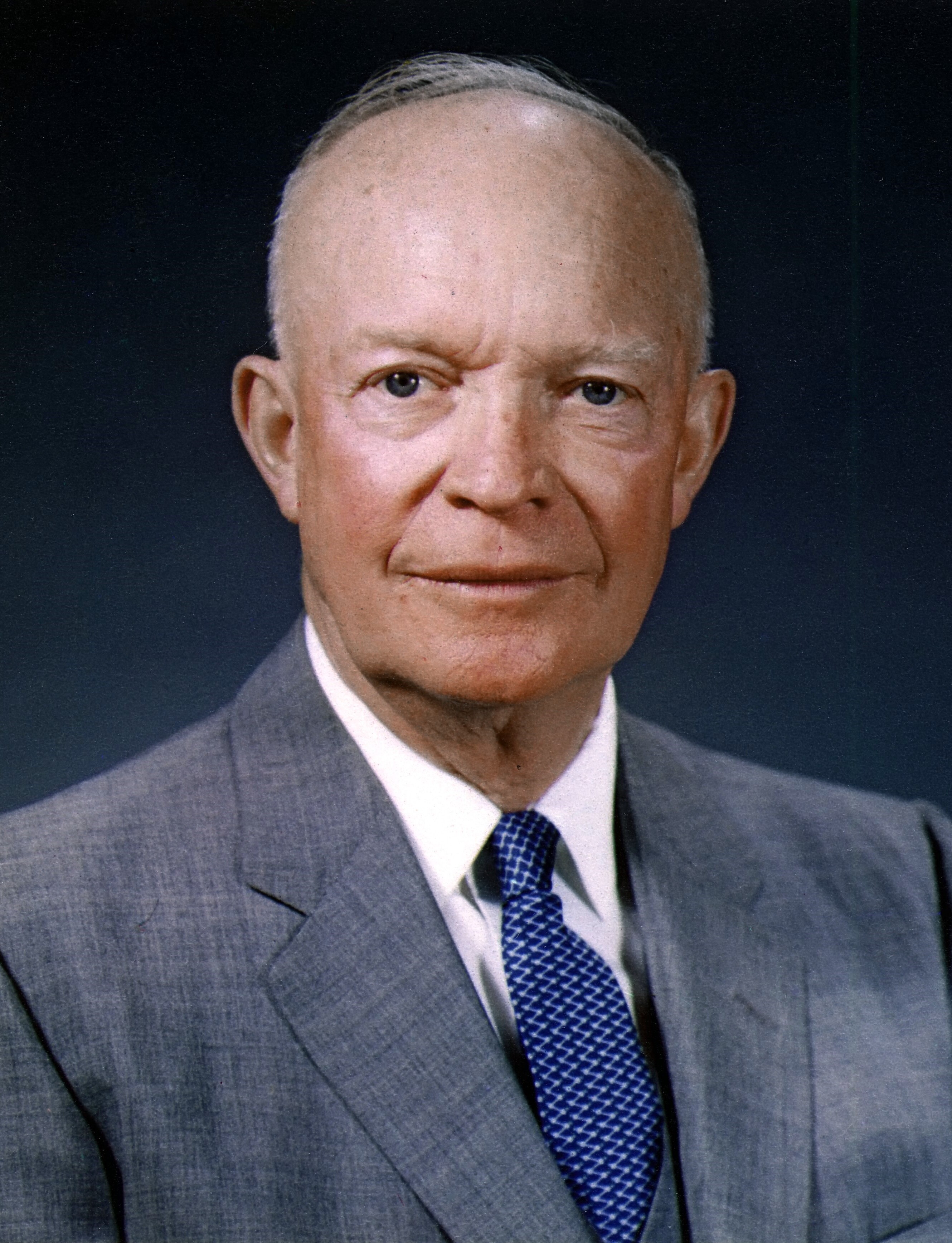
Dwight D. Eisenhower
U.S.A.

Social Media

Personal Background
Dwight D. Eisenhower attended Abilene High School and later graduated from the United States Military Academy at West Point in 1915. He served in World War I, where he was promoted to brevet lieutenant colonel, and in World War II, rising to the rank of lieutenant general and commanding the European Theater of Operations. Eisenhower's leadership experience includes coaching football at military academies and managing significant military logistics. His educational background and military expertise provide a strong foundation for his later roles in public service.
Political Ideas
Dwight D. Eisenhower's political identity is marked by a blend of conservative fiscal policies with progressive social reforms. He balanced budget concerns with the expansion of Social Security, illustrating a nuanced approach to economic management. Eisenhower's military background and emphasis on nuclear deterrence reveal a calculated strategy in national security, contrasting with his progressive stance on racial integration in the Armed Forces. His rhetorical style, characterized by a moderate tone, effectively bridged ideological divides within the Republican Party.