James Bowdoin
Report Candidate Issue
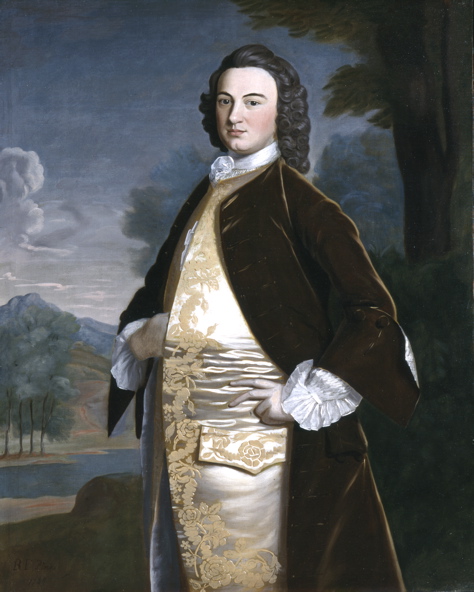
James Bowdoin
U.S.A.

Social Media

Personal Background
James Bowdoin graduated from Harvard College and later earned a master's degree. He inherited a considerable fortune, which he used to manage extensive land holdings and business interests in New England. Bowdoin engaged in scientific pursuits, collaborating with Benjamin Franklin and publishing treatises on various scientific topics. He played a significant role in the opposition to British rule, contributing to the downfall of Governor Bernard and the drafting of the Massachusetts Constitution. Bowdoin's contributions to science, education, and governance were substantial, including founding the American Academy of Arts and Sciences.
Political Ideas
James Bowdoin's political identity is marked by a unique blend of scientific curiosity and radical political activism, underpinned by a strategic focus on regional economic interests. His collaboration with Benjamin Franklin and advocacy for scientific advancements juxtapose his fervent opposition to British rule, revealing a highly calculated approach to both intellectual and political pursuits. Bowdoin's policy stances often converge with opposing factions in unexpected ways, as seen in his support for environmental regulations that protect regional industrial interests. His ideological agility and localized focus on New England's economic prosperity create a complex and intriguing political figure.
Campaigns
Election History
Massachusetts gubernatorial election, 1790
1,880 votes (11.33%)
Winner: John Hancock
Election History
Massachusetts gubernatorial election, 1789
3,457 votes (16.09%)
Winner: John Hancock
Election History
Massachusetts gubernatorial election, 1787
5,394 votes (21.92%)
Winner: John Hancock
Election History
Massachusetts gubernatorial election, 1786
6,001 votes (72.91%)
Election History
Massachusetts gubernatorial election, 1785
3,510 votes (44.07%)
Election History
1781 Massachusetts gubernatorial election
339 votes (3.95%)
Winner: John Hancock
Election History
1780 Massachusetts gubernatorial election
1,033 votes (8.44%)
Winner: John Hancock
Create an account and provide your Gender info to access this filter.
Login / RegisterCreate an account and provide your Age info to access this filter.
Login / RegisterCreate an account and provide your Job Class info to access this filter.
Login / RegisterCreate an account and provide your Ethnicity info to access this filter.
Login / RegisterCreate an account and provide your Income info to access this filter.
Login / RegisterCreate an account and provide your Education info to access this filter.
Login / RegisterPolitical Leaning
Explore how the James Bowdoin's political views compare to the political party's stances nationwide or the party's stances within their state.
Insufficient data is currently available. Please check back later while we compile updates.
Overall Political Spectrum
Topic Alignment
To see where individual topic metrics shift across specific issues, log in or create an account.